
Recycling is defined as the process of transforming waste into new material so that it can be given a new use. Nowadays, recycling has become an increasingly important disposal method because of the implementation of relevant and binding national and international environmental legislation. Recycling targets imposed by legislation have been increasing over time in most countries. A material recovery facility (MRF), also known as materials recycling facility is a plant that receives, separates and prepares recyclable materials using a mixture of manual and automated methods, for marketing to end-user manufacturers to create new products.
Material recovery facilities struggle with a variety of unwanted materials (plastic bags, large objects, and trash) which increase the need for manual sorting, and which increases inefficiencies for MRF operators and ultimately for the communities they serve. However, advances in technology make today’s MRF facilities different and, in many respects, better than older versions. Today, MRF facilities are attracting renewed interest to address low participation rates for source-separated recycling collection systems and prepare fuel products and/or feedstocks for conversion technologies, giving communities the opportunity to recycle at much higher rates. Separation technologies used in MRF facilities exploit varying properties of the different materials in the waste. These properties include the size and shape of different objects, their density, weight, magnetism, and electrical conductivity.
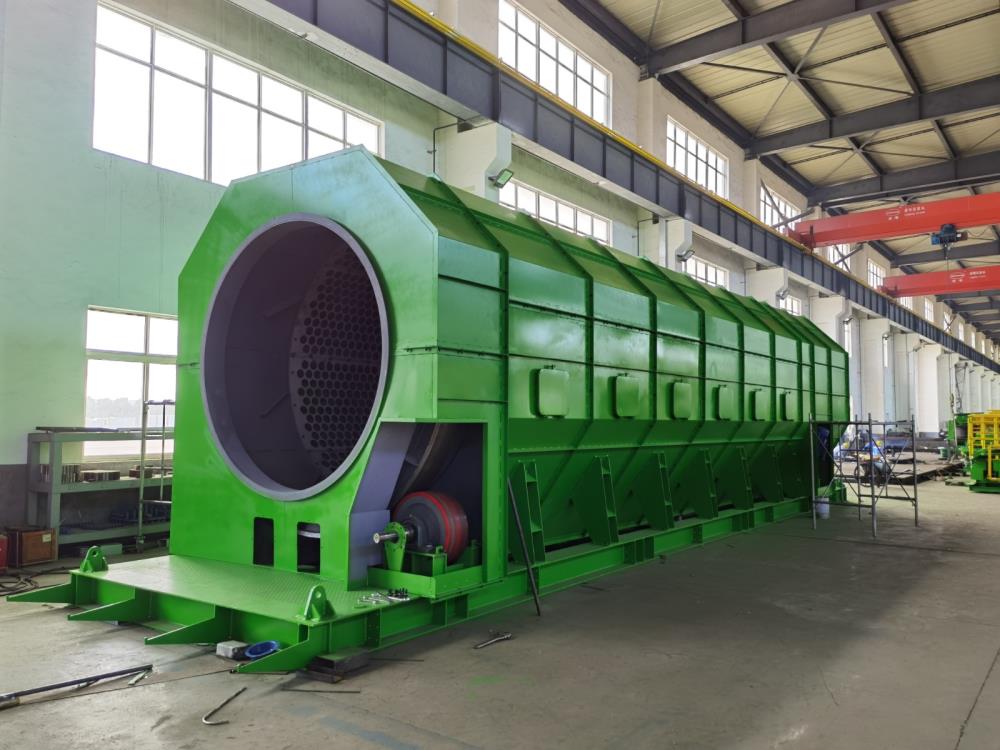
trommel screens are examples of separation techniques which are commonly used in municipal solid waste (MSW) treatment plants. They can be used for both raw MSW and the air-classified light fractions of wastes to separate solid materials into different sizes. MSW sorting process consists of three major units: shredding, air classification, and screening. Packer trucks deliver the sorted MSW to the MRF facility, which can process up to 30 tons/hr at maximum capacity per one line. The sorting process initializes in a bag-ripping unit, which aims to open plastic bags. The ferrous metal is then extracted from the MSW stream using magnets; and the recovered ferrous metal is conveyed to a ferrous storage bin from where it is recycled. MSW is then processed in a vertical hammermill shredder to reduce it to a normal size. Shredded MSW is taken to an air classifier, using a belt-type conveyor. Non-ferrous materials, such as aluminum cans and combustibles are crushed by the vertical hammermill shredder. A manual sorting unit is added prior to the vertical hammermill shredder for the recovery of aluminum cans for recycling. The air classifier, blowing from the vertical hammermill shredder, is intended to separate the inert materials, such as glass, ceramics, soil and so on, to reduce the content of heavy non-combustible material in the residual MSW streams. Light materials, passing through the air classifier, are sent into the trommel screen for advanced separation.
